Building Careers, Building Neighborhoods: Pitt Community College Sets a Statewide Model for Affordable Housing
Published: October 22, 2026
Pitt Community College student-built housing initiative sets statewide model for workforce, affordable housing
RALEIGH, N.C. — On the morning of Aug. 6, a house built by Pitt Community College students rolled off campus and onto a vacant lot in West Greenville, where a qualifying family will buy it.
The home is part of a partnership between the college and the City of Greenville that pairs two of North Carolina’s most pressing needs: housing and the skilled workers to build it. The state faces a shortage of more than 750,000 housing units through 2029, according to the Office of Gov. Josh Stein.
Earlier this year, Dr. Maria Pharr, president of Pitt Community College, and Dr. Keith Kinlaw, dean of the Construction and Industrial Technology Division, presented the “Building Careers, Building Neighborhoods” initiative to the State Board of Community Colleges.
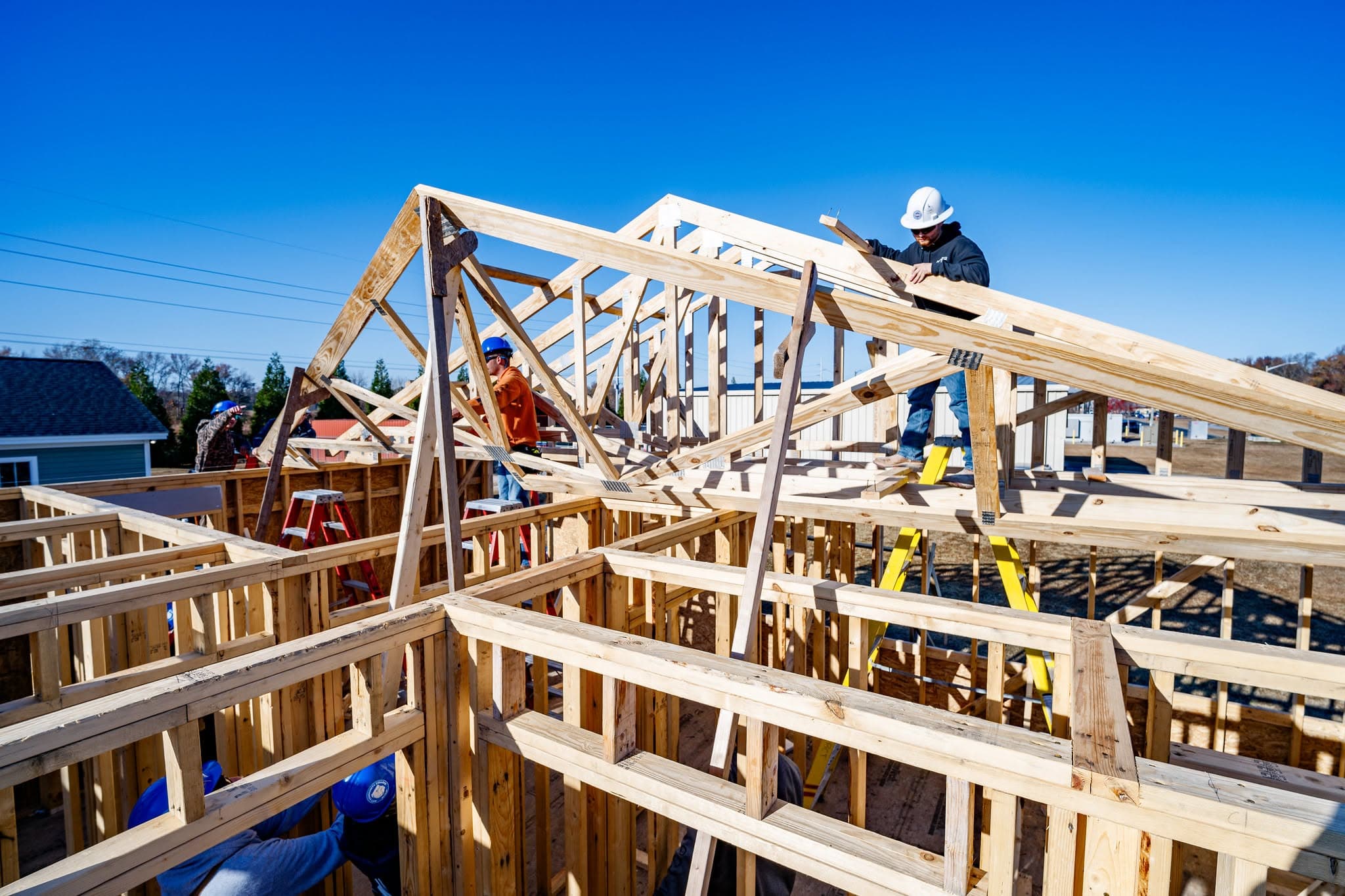
While residential home construction has been a part of the college curriculum since 1988, a new partnership with the City of Greenville allows students to build affordable housing on campus as part of their coursework. Once completed, the homes are relocated to city-owned lots, allowing qualifying families to purchase them as part of the city’s affordable housing strategy.
The program directly supports Greenville’s 50-in-10 Affordable Housing Initiative, a long-term plan to deliver 50 affordable housing units in the West Greenville area over the next 10 years.
“This is not just one program affected, this is a lot of programs affected,” Kinlaw said. “These are real homes that have been built by real students.”
The program allows students to gain authentic, credit-bearing learning experiences as they work through the entire process of building a home. Students rotate through every phase of construction, meeting the exact same inspection requirements and codes as a private contractor. The initiative also engages local high school students through multiple summer academies, expanding the region’s workforce pipeline.
Gov. Josh Stein visited the campus in May alongside Pharr and Tiana Berryman, Greenville’s director of neighborhood and business services, to highlight the program. The visit followed Stein’s signing of Executive Order No. 36, which focuses on increasing housing supply and affordability across the state.
“To lower families’ largest monthly expense, their mortgage or rent, we need to significantly increase the number of homes we build each year,” Stein said. “Through initiatives like Pitt Community College’s construction and industrial technology programs, we are helping North Carolina shore up the construction workforce while connecting people to good jobs with good wages that can support a family.”
Pharr emphasized that the hands-on approach provides benefits that extend far beyond the campus.
“Our students don’t just learn to build. They build actual homes for families in our community,” Pharr said. “Through our Construction and Industrial Technology programs, we are training the electricians, HVAC technicians, and construction professionals Eastern North Carolina needs, while producing affordable housing that strengthens our neighborhoods. Governor Stein’s executive order captures exactly what we believe: that workforce development and housing opportunity are inseparable. When our graduates enter the workforce with real skills and living-wage careers, they don’t just build homes for others. They become homeowners themselves.”
According to Pharr, the ecosystem relies on eight different entities, bringing together local industry, philanthropic organizations, utilities, health care, and state partners. Proceeds from the sale of the homes are reinvested into the next build, creating a self-sustaining financial model.
Through this initiative, the college has developed a scalable model to share with other colleges across North Carolina interested in implementing similar workforce and housing solutions.
“We don’t want to keep this to ourselves,” Pharr said. “The most important thing that (other schools) are going to have to have, though, is the relationships. You have to have the vision, and you have to have the ability to bring things together, whether they’re the programs within your own college or whether they’re the groups that all have a piece in making this work.”
[Feature image photo credit: Aaron Hines / City of Greenville]