State Board of Community Colleges Highlights Early Success of Access to Achievement Program, Unveils ROI Projections for Propel NC
Published: May 26, 2026
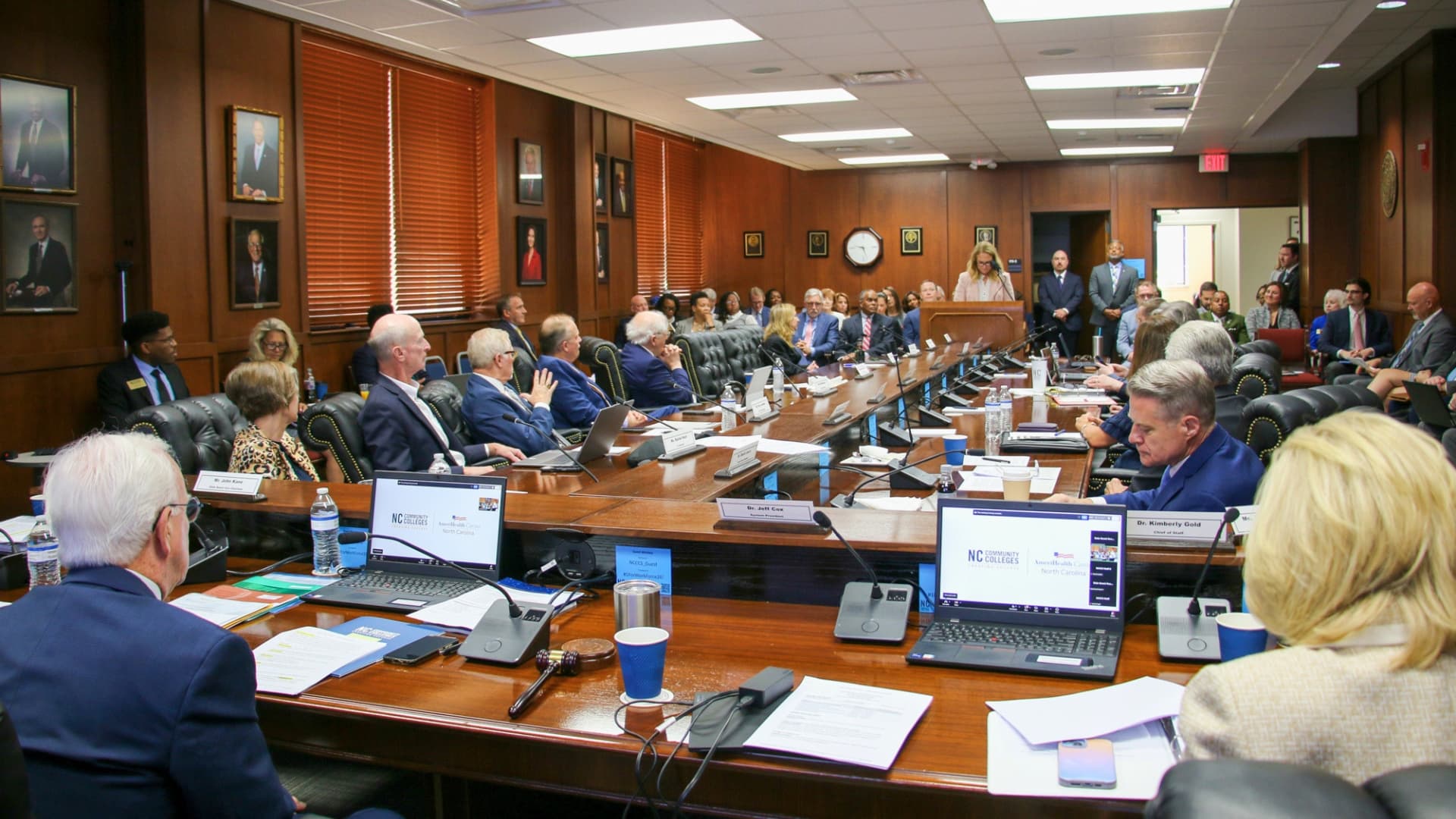
RALEIGH, N.C. — At its May meeting, the State Board of Community Colleges celebrated major updates to high-impact student achievement programs, reviewed new economic impact projections for its primary legislative request, and approved leadership transitions for the North Carolina Community College System.
Leading the meeting’s highlights, the Board received the latest report on Access to Achievement, North Carolina’s workforce training program for students with intellectual and developmental disabilities. Now completing its second full year of implementation across 15 colleges, the program provides intensive support, peer mentorship, tutoring, and technology training to help students earn credentials and gain essential employment skills.
The report shows strong results: over the past two years, program coordinators have supported 871 students, who achieved a course success rate of nearly 90 percent. More than 300 of these students have already earned a credential.
“These are students who have had trouble typically throughout their academic careers, so these are pretty startlingly good statistics,” said Nancye Gaj, the program’s state director.
Sarah West, chair of the Board’s programs committee, emphasized the program’s life-changing reach.
“This isn’t just about getting a certificate or a degree. This is about establishing someone’s path to an independent, meaningful, productive life,” West said.
To sustain this momentum, the Board approved a $2.9 million allocation to the 15 participating colleges. System leadership noted that the program could soon expand to 25 colleges under Senate Bill 991, which recently passed the Senate Education Committee unanimously.
New Projections Demonstrate Strong ROI for Propel NC
The Board also unveiled new return-on-investment (ROI) projections for Propel NC, the System’s proposed overhaul of its business-model funding structures. The estimates come as System officials advocate during the General Assembly’s short session for their $93 million recurring legislative request, which would prioritize high-wage, high-demand sectors.
Projections indicate that under Propel NC, healthcare program completions would rise 11 percent by 2030 (approximately 600 more completers), while trades and transportation completions would jump 13 percent (an additional 1,100 completers). Information technology, public safety, and advanced manufacturing programs would each see an 8-percent increase in completions.
System officials noted that, absent full funding, securing $18.5 million to create funding parity between curriculum and continuing education courses remains a priority.
Boost Initiative Receives $6 Million Expansion
System President Dr. Jeff Cox announced a combined $6 million in philanthropic investments to expand Boost, a statewide student-success and advising initiative. The William R. Kenan Jr. Charitable Trust committed $3 million to bring the program to roughly 450 healthcare students at Wake Technical Community College.
“It’s a monumental step today for Wake Tech and our students, but also the future of North Carolina’s health care workforce and models that will support growing the health care workforce across the North Carolina Community College System,” said Dr. Scott Ralls, president of Wake Tech.
Concurrently, AmeriHealth Caritas North Carolina announced a $3 million investment to launch the Bridge initiative, a pilot version of the Boost model tailored for up to 1,000 students pursuing short-term healthcare credentials across three colleges.
“This investment will provide flexible, last-dollar, if you will, supports to these students. We aren’t just paying for books. We’re helping to cover the life expenses that could derail a student’s path to graduation and the high-demand, high-earning job potential that is waiting for them,” said Heidi Chan, market president for AmeriHealth Caritas North Carolina.
 Presidential Leadership Transition and Interim Appointment
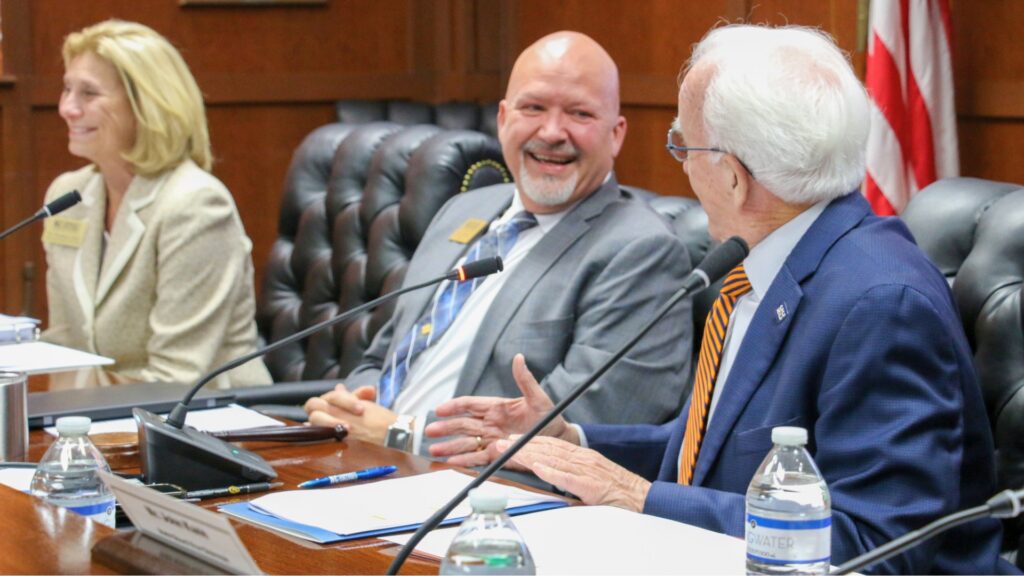
As President Dr. Jeff Cox prepares for his retirement on June 30, the Board voted to approve Dr. Bill Carver to serve as interim System president starting July 1, ensuring operational continuity while the comprehensive national search for a permanent successor concludes.
“Bill Carver has proven himself more than capable in this role, and we are fortunate to have someone of his experience and dedication available to lead the System during this transition. We are confident in his ability to keep the work moving forward while we conduct a thorough search for our next permanent president,” said Board Chair Tom Looney. “On behalf of the Board, I also want to thank Jeff Cox for his years of service to North Carolina’s students and communities.”
At the close of the meeting, Dr. Cox received the Order of the Long Leaf Pine, honoring his three decades of service to education.
2026 Student Success Performance Measures Approved
The Board officially approved the 2026 Performance Measures for Student Success Report, recognizing Central Piedmont, Wayne, Catawba Valley, Johnston, and Caldwell community colleges for achieving excellence across five of the seven core accountability metrics.
Dr. Bill Schneider, vice president of system effectiveness, discussed the challenges of statutorily locked metrics.
“One of our big challenges is that we’ve been kind of boxed into these measures a little bit. So, every single change we make to a measure needs to be statutorily changed and included. If given more flexibility in statute, we can kind of think about: What does the future of state performance measures look like with that flexibility?” Schneider said.
Other Board Actions and Approvals
- Systemwide CRM Under Review: To create a unified statewide approach to recruitment, enrollment, and student engagement, the System has issued a Request for Information (RFI) to evaluate a potential cloud-based Customer Relationship Management (CRM) platform across all 58 community colleges. The Board’s transformation committee will bring a formal recommendation to the full Board in July.
- Student Financial Assistance: Approved $1.5 million for Finish-Line emergency grants (up to $2,000 annually per student for critical life needs) and $1 million for the Short-Term Workforce Development Grant Program ($750 per course for noncredit workforce training).
- Healthcare Grant Extension: Approved a six-month extension through December 2026 for American Rescue Plan-funded healthcare workforce grants.
- New Course and Licensure Approvals: Approved new micro-credential workforce courses designed by AdvanceNC and granted approval for seven community college educator preparation programs to offer additional teacher licensure pathways.
- Innovators-in-Residence Network: Allocated $40,800 in State Board Reserve funds to launch a professional development network focused on sharing institutional best practices in artificial intelligence and technology-enabled learning.