
DRAFT: NC Community College System Workforce Pell Resources
Welcome to the North Carolina Community College System Workforce Pell Toolkit.
This resource is designed to help colleges navigate and implement the expanded federal Pell Grant eligibility for high-quality, short-term workforce education programs. The toolkit provides practical guidance, reference materials, and best practices to support colleges in aligning eligible programs, ensuring compliance, and maximizing student access to financial aid. Whether your college is beginning to explore Workforce Pell opportunities or refining existing processes, this toolkit offers the tools and resources needed to help North Carolina students gain valuable skills for high-demand careers.
As we receive more guidance from the federal government on Workforce Pell Grants and implementation processes, we will be updating this toolkit, so please check back from time to time. We also invite you to submit your feedback on this resource and questions about Workforce Pell Grants here.
NCCCS Contacts
Dr. Andrew Gardner, Associate VP, Workforce Strategies, gardnera@nccommunitycolleges.edu
Dr. Torry Reynolds, Associate VP, Student Services, reynoldst@nccommunitycolleges.edu
Starting July 1, 2026, a major opportunity opens for North Carolina’s colleges, employers, and adult learners: students in short-term workforce programs can finally qualify for federal Pell Grants. The new Workforce Pell Grant category is designed for exactly the kind of fast, job-focused training that powers our state’s talent pipeline—helping students gain employer-recognized skills quickly while building momentum toward certificates, degrees, and stronger long-term earnings.
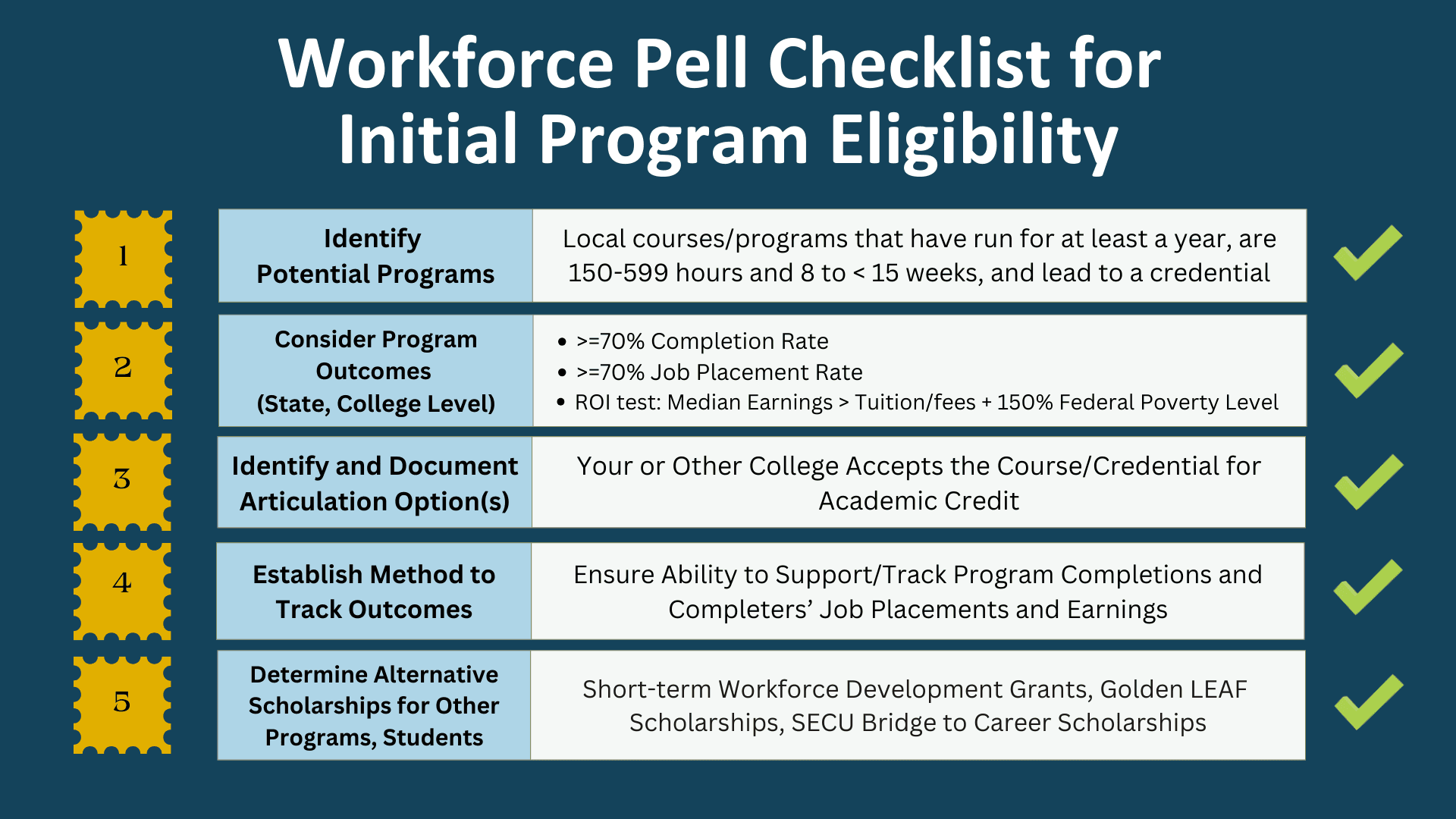
Based on H.R. 1, signed into law on July 4, 2025, Workforce Pell brings Pell eligibility to high-quality short-term programs that meet clear federal standards. Eligible programs must run 150 to 599 clock hours, at least 8 but less than 15 weeks, lead to a credential, and clearly connect to academic pathways. For colleges and workforce partners, this is a chance to expand access, strengthen completion, and increase economic mobility in North Carolina. For employers and the North Carolina economy, this is a chance to fuel the economic engine through a pipeline of ready workers while also building the overall talent pool and education level in the state.
Community colleges will need to be proactive to gain eligibility for their programs. Before a program can be reviewed for eligibility, it must have operated for at least a year, meet the program structure/time frame requirements (described above), and show three types of outcomes:
1) completion rate of at least 70% (within 150% of normal time to completion)
2) job placement rate of at least 70% (180 days after completion)
3) a positive ROI: median earnings of program completers exceed the tuition/fees for the program plus 150% of the Federal Poverty Level

Successful Program Completion

Success in Getting a Job

Earnings worth the cost of education

150 to 599 Hours
Credential and ArticulationWorkforce Pell-Eligible Programs