
Workforce Pell Resources
Helping colleges navigate and implement the expanded federal Pell Grant eligibility for high-quality, short-term workforce education programs.
Potential Workforce Pell-Eligible ProgramsWelcome to the NC Community College System Workforce Pell Toolkit
The Workforce Pell Toolkit is designed to support North Carolina community colleges as they prepare for and implement the expansion of federal Pell Grant eligibility to short-term workforce training programs. Inside, you’ll find practical guidance, reference materials, and best practices to help align eligible programs, maintain compliance, and expand access to financial aid for students pursuing in-demand careers.
Whether your college is just beginning to explore Workforce Pell opportunities or refining existing processes, this toolkit serves as a central resource to support successful implementation and student access statewide.
As the federal government releases additional guidance on Workforce Pell Grants and implementation requirements, this toolkit will be updated. We also invite you to submit your feedback on this resource and questions about Workforce Pell Grants here.
Contacts
Dr. Andrew Gardner, Associate VP, Workforce Strategies, gardnera@nccommunitycolleges.edu
Dr. Torry Reynolds, Associate VP, Student Services, reynoldst@nccommunitycolleges.edu
Eligibility Requirements
Beginning July 1, 2026, students enrolled in approved short-term workforce programs will become eligible for federal Pell Grants—marking a significant shift in how job-focused training can be financed. Workforce Pell is designed to expand access to fast, affordable pathways that lead directly to high-demand careers while also supporting long-term credential and degree attainment.
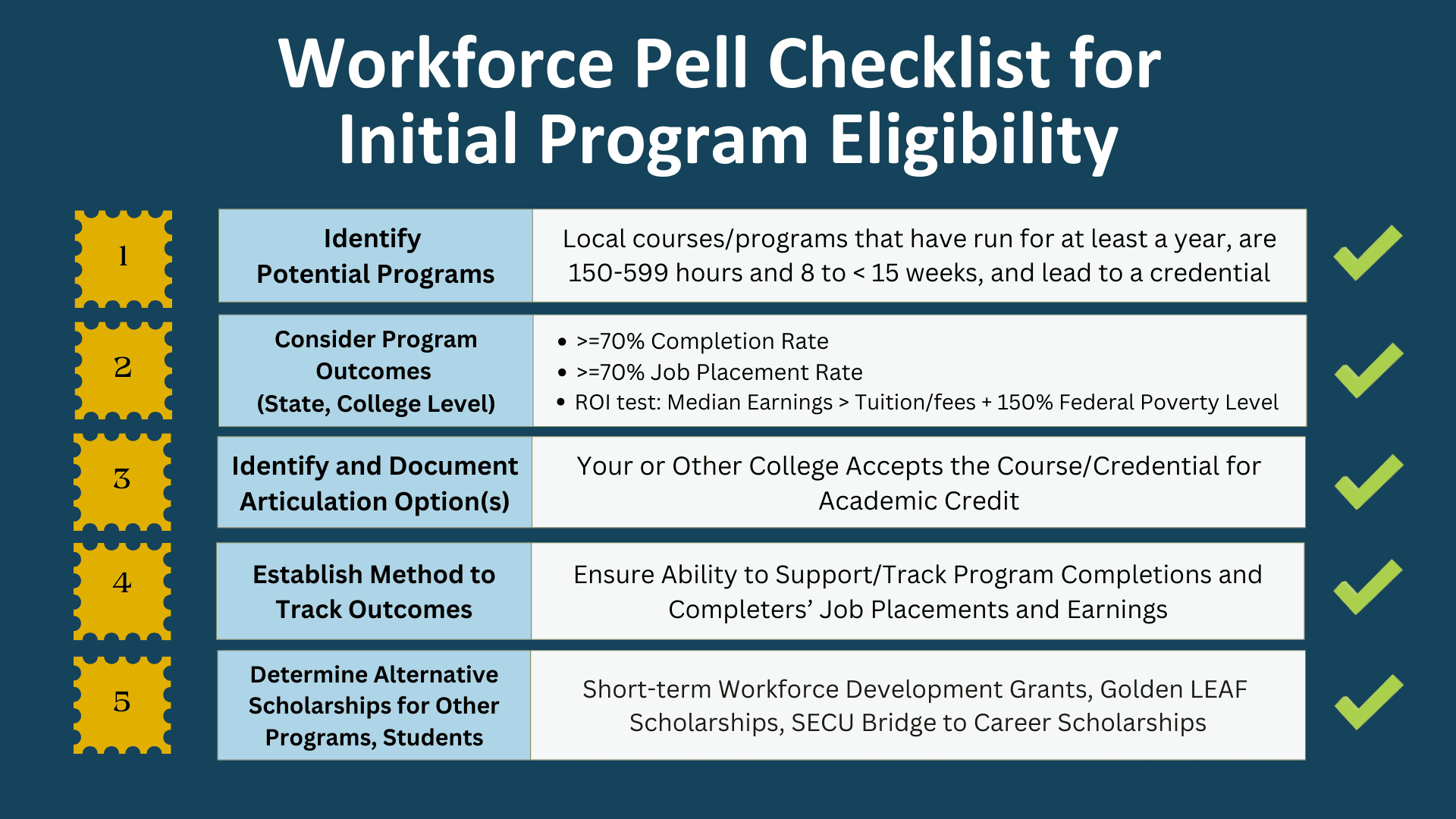
Authorized through H.R. 1 and signed into law on July 4, 2025, Workforce Pell extends Pell eligibility to high-quality short-term programs that meet specific federal standards. Eligible programs must run between 150 and 599 clock hours, last at least 8 weeks but fewer than 15 weeks, lead to a recognized credential, and clearly connect to an academic pathway.
For colleges, this creates a powerful opportunity to expand access, improve outcomes, and strengthen workforce pipelines. For employers, it supports a more prepared and credentialed talent pool to meet North Carolina’s evolving labor market needs.
To be considered for Workforce Pell eligibility, programs must also demonstrate strong student outcomes. Before submitting a program for review, colleges must show that it has been operating for at least one year and meets the required structure and timeframe. In addition, programs must document a completion rate of at least 70 percent, a job placement rate of at least 70 percent within 180 days of completion, and a positive return on investment, meaning the median earnings of program completers exceed tuition and fees plus 150 percent of the Federal Poverty Level.
Potentially Eligible Programs
See List of Programs That Meet Workforce Pell Time Frames (Potentially Eligible)