State Board of Community Colleges Advances Presidential Search, Strategic Priorities, and Student Success Initiatives
Published: January 28, 2026
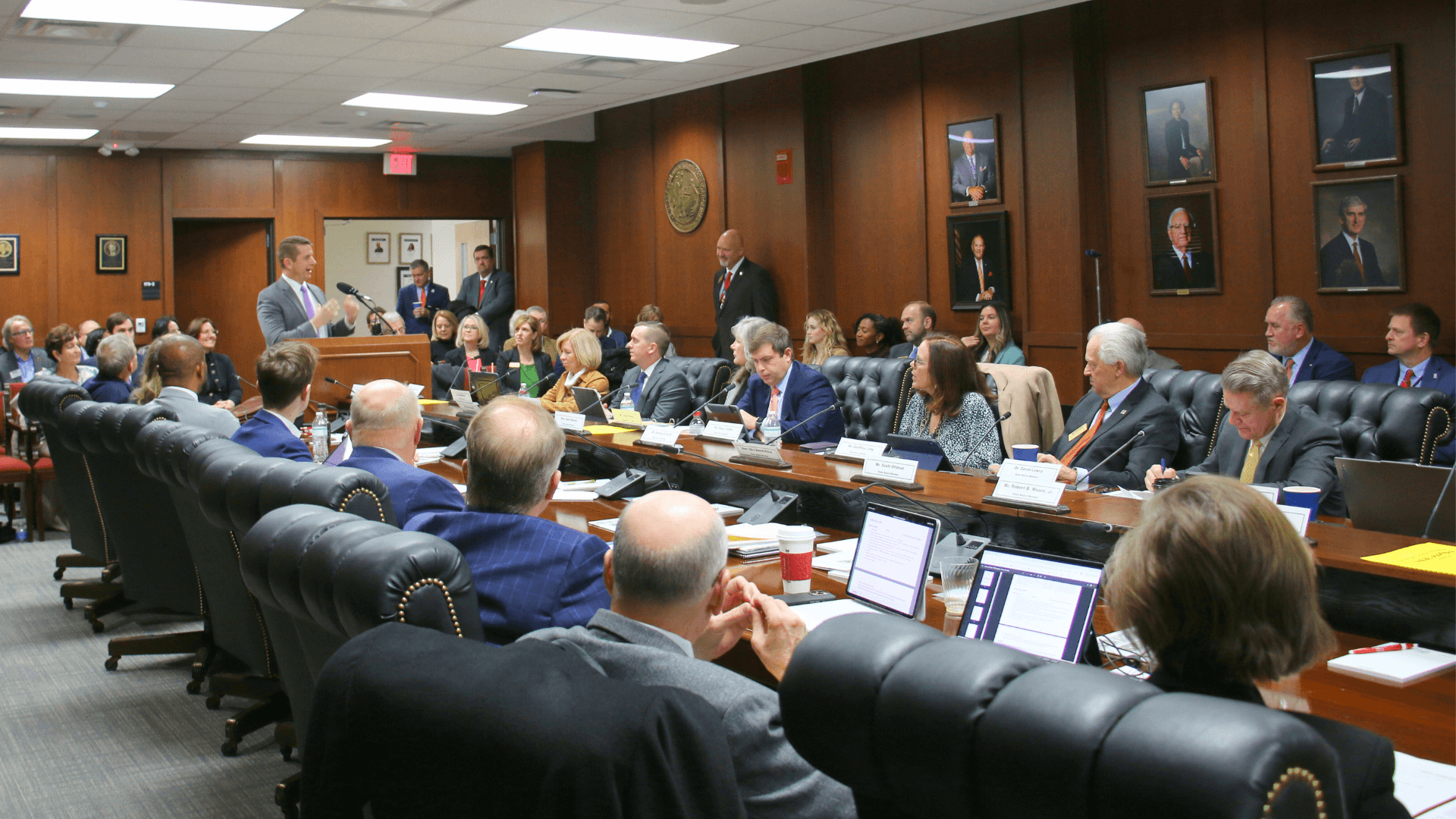
The State Board of Community Colleges met January 15-16 to advance key priorities for the North Carolina Community College System (NCCCS), including the presidential search, discussion of new strategic goals, and investments in student success and workforce alignment.
Presidential Search Update
The Board announced the selection of a national executive search firm, Buffkin Baker, to lead the search for the next president of the North Carolina Community College System, following the planned retirement of President Dr. Jeff Cox. The firm was recommended by the Board’s search committee after a competitive process.
“Following an evaluation of written proposals and in-person presentations by three qualified finalists, the Board’s search committee recommended a firm based upon its demonstrated experience with executive-level searches, understanding the complex organizational leadership, and ability to support the Board through a comprehensive search process,” said board chair Tom Looney.
Funding for the contract will be supported through existing, authorized resources.
New Mission Statement and Strategic Goals
The Board also reviewed updates to the 2026–2029 Strategic Plan, including a proposed mission statement that clarifies the role of the System Office:
The System Office leads statewide policy, advocacy, modernization, and workforce alignment to strengthen community college capacity and ensure North Carolina is the national leader in talent and workforce readiness.
Following months of engagement with college presidents, System Office staff, and Board members, the proposed strategic goals include:
- Building the best workforce in the world
- Aligning employers, students, and colleges to future-ready North Carolina’s economy
- Transforming the System to empower colleges and students for continuous success
The Board is expected to vote on the goals at its February meeting.
“After February’s decision on our goals, we’re going to tap the brakes on the 2026–2029 planning process until the next president arrives,” said Board member Dr. Dale McInnis. “So, the next few months, that’s where we’re going to be focusing on: where we are right now.
Student Success, Boost, and AI Innovation
The Board also received updates on Boost, North Carolina’s accelerated college-to-career program designed to improve completion rates and connect students to high-wage, high-demand careers. To date, 927 students have enrolled across the first cohort of eight colleges, reaching approximately 84% of the program’s first-year enrollment goal. A second cohort of seven colleges is scheduled to launch in fall 2026.
Board members also received a report on the AI.iNC Project, led in partnership with Jobs for the Future, which is helping the System proactively respond to the growing impact of artificial intelligence on education and the workforce. Accomplishments include the establishment of an NCCCS AI Leadership Council, development of an AI Guidance Handbook, and integration of AI-related skills and instructional resources into professional development offerings across the System.
Modernizing Student and College Systems
The Board heard a demonstration of new functionality within Ellucian’s Banner platform, the Enterprise Resource Planning (ERP) system that will replace Colleague. Banner will modernize how students, faculty, and staff access academic, financial, and advising information, while also reducing long-term costs for colleges by consolidating systems.
Features highlighted included enhanced degree planning tools that allow students to explore program pathways and “what-if” scenarios, supporting more proactive advising and student decision-making.
Student Success Initiative
The Board received a legislative update on the Student Success Initiative (SSI), a program rooted in more than 20 years of work to close achievement gaps and improve outcomes for historically underachieving students.
Since its realignment and expansion in 2025, SSI has demonstrated measurable impact:
- Developmental and General Education course success rates increased by 8%
- Career and Technical Education success rates increased by 9%
- Persistence and completion rates rose to 53.9%
- More than 27,000 students were served through targeted interventions in FY 2024–25
Board members emphasized the importance of restoring funding for SSI in the upcoming state budget to sustain and scale these outcomes statewide.
Other Business
- The Board approved Dr. Shannon Hair as the seventh president of James Sprunt Community College and recognized the introduction of Dr. Sylvia Cox as president of Rockingham Community College.
- The Finance Committee approved reallocations to support colleges most impacted by Hurricane Helene, including Asheville-Buncombe Technical Community College, Haywood Community College, and Mayland Community College, helping stabilize enrollment and operations during recovery.
- The Board also recognized a $100,000 grant from the AT&T Foundation, which will expand and sustain the System’s Digital Navigators Program at additional colleges.
- The Board approved several new curriculum programs for fall 2026 and six new teacher residency licensure certificates to be offered statewide.
- The Board approved formal definitions and standards for pre-apprenticeship programs, providing long-needed structure and consistency to strengthen hands-on learning and alignment with registered apprenticeship pathways.
- The Board approved updates to the Special Application Program (SAP) list, streamlining the process for colleges to offer, modify, or terminate high-demand programs aligned with workforce needs and Propel NC priorities.
The State Board of Community Colleges will hold its next meeting on February 19–20.